Fake Airline Helplines and Refund Links: Scams That Follow Flight Disruptions
Umme Ayesha
•16 min read
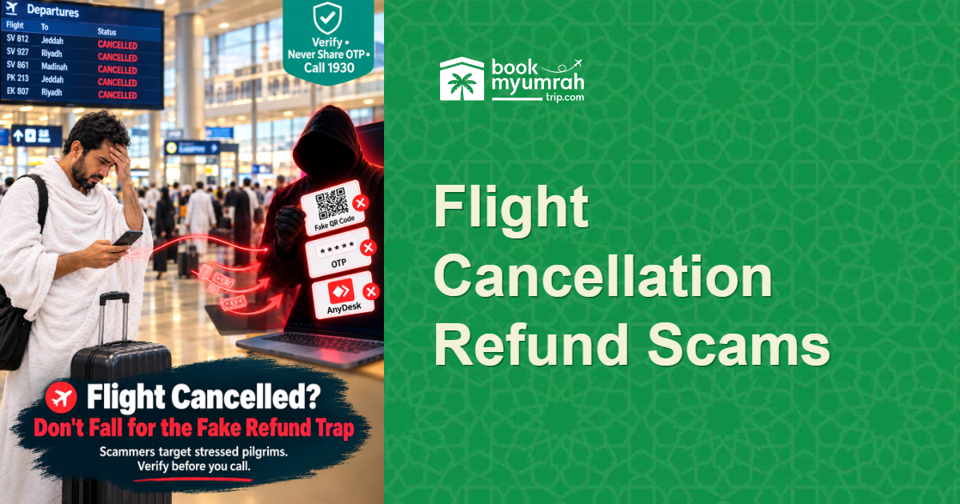
Your Umrah flight gets cancelled. You're standing at the airport, tired, worried about your dates. You pull out your phone and search for the airline's refund number.
That's exactly the moment scammers are waiting for.
They've built fake websites, fake helplines, and fake refund links. All designed to catch you when you're stressed and rushing. This guide shows you how they operate. And how to keep your money safe.
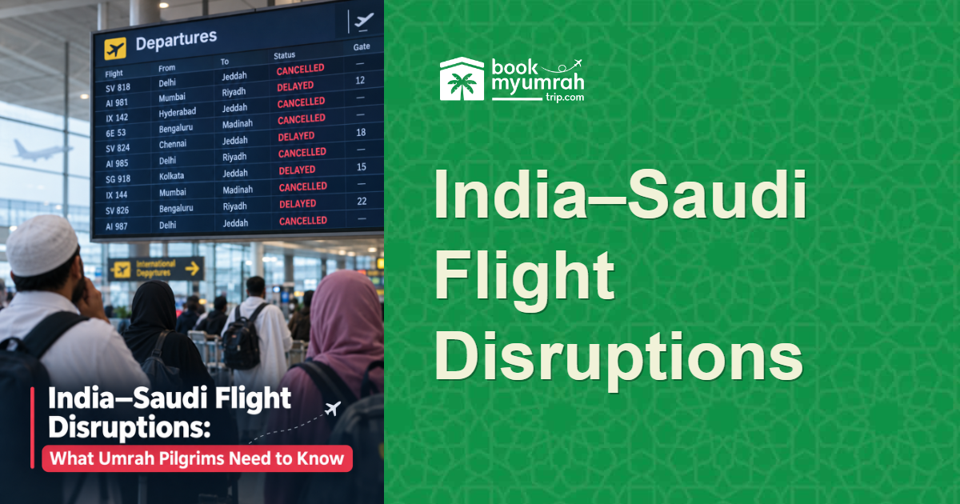
When flights get cancelled, lakhs of people search for a refund at the same time.
The scammers know that you are in a hurry. You want a quick refund.
You search for an airline customer care number on Google.
A fake number appears at the top as an ad. You call it.
The scammers also send a fake SMS: "Your flight is cancelled, click for a refund".
The pilgrims are an easy target. Many are first-time flyers.
So, this is the reason why Flight cancellation refund scams increase a lot during disruptions.
How the Scam Works: Anatomy of a Flight Disruption Cyber Attack
Here is the step-by-step process of how they cheat you.
Step 1: You search for an airline refund number. You see a number on a Google ad.
Step 2: You call that number. The person says, "I am from the airline refund department".
Step 3: He asks for your PNR, your name, and your bank details.
Step 4: He says, "To get the refund, pay Rs 100 as a processing fee" or "Share the OTP".
Step 5: You share the OTP, or you pay via UPI. The money is gone.
Step 6: He asks you to download any screen sharing app. Then he can see your phone.
This is how scammers steal airline booking details, and it is the basis of all Flight ticket refund payment scams.
How to Spot a Fake Airline Helpline or Refund Link
The fake helpline scam is the most common type of scam.
The scammers create a fake website that looks like the real airline site.
They run Google ads. So their fake number comes on the top.
They make a fake Facebook and Instagram page with the airline logo.
They reply to your complaint on X: "Please share your PNR for a refund".
Once you share the PNR, they send you a fake refund link.
These are the classic Fake airline customer care number scams, and many people fall for them.
How to Safely Rebook or Claim Refunds During Flight Cancellations
Now let me tell you the safe way to get your refund.
Go to the official airline website only. Type the URL yourself.
Check the refund status in the "Manage Booking" section.
Call the number from the airline website footer, not from a Google search.
For rebooking, go to the airline counter at the airport. It is the safest.
Don't share your PNR with anyone except the official staff.
This is the safest way to avoid Flight cancellation refund scams.
How the Fake Helpline Scam Works
Look, this is how they cheat you. They know you need help fast.
They put fake numbers on Google. You search airline customer care and their number comes on top. It looks real.
You call. Someone picks up fast.
Then he asks for your ticket number or PNR. You think, okay, he is genuine, so you give it.
Then he says - Your refund is ready. He sends a link on WhatsApp or a QR code.
You scan it, or you enter your UPI PIN. And boom, money goes from your account.
So please, don't do that. Take the number only from the airline's official website. And never share your UPI PIN. You never get money by scanning a QR.
What the Airlines Themselves Are Saying
The airlines have also warned passengers about this Online travel refund fraud.
Air India and IndiGo have said - we never ask for an OTP for a refund.
They said: check your refund only on our official site.
They said: we don't have a WhatsApp refund service where we ask for bank details.
So if you get a WhatsApp message for a refund, it is part of Fake airline helpline WhatsApp scams.
Real Victims, Real Losses
These are not hypothetical warnings. Pilgrims and travellers are losing real money.
A pilgrim from Hyderabad lost Rs 45,000. He called the first number on a Google ad.
The person asked for a small fee via UPI, then asked for AnyDesk, then took all the money.
Another family from Kerala got an SMS for a refund and lost Rs 28,000.
Lucknow: A man searching Google for a flight refund helpline was told to download an app. He lost ₹1.94 lakh in two transactions within minutes.
These cases are a part of Online flight booking scams and Airline refund phishing scams in India.
This is why you must be very careful about Flight cancellation refund scams.
Why Indian Pilgrims Are Especially at Risk Right Now
Indian Umrah pilgrims are at greater risk during this time.
Most Umrah pilgrims have never travelled abroad before. They tend to place their trust in anyone who speaks to them politely.
You should go through this list before calling anyone about a refund.
Verify the contact source:
Is this number on the airline's official website? If not, do not call.
Did you find it through a Google search? Do not trust it.
Did someone send it to you on WhatsApp? Verify independently.
Know what real airlines never do:
They never ask for your OTP.
They never ask for your UPI PIN or card CVV.
They never ask you to download AnyDesk or TeamViewer.
They never ask you to scan a QR code to receive money.
They never ask you to pay a "processing fee" for a refund.
Use only official channels:
Airline app or website.
Airport counter.
Number on your ticket.
Verified social media account.
Following this checklist will keep you safe from Airline refund phishing scams in India and other travel refund frauds.
Fake Refund Links
Fake refund links arrive via messages. Sometimes by SMS or email. Nowadays, you may receive messages on WhatsApp. They look like official airline messages.
What they say:
Your flight is cancelled. Click here to claim your refund.
Refund pending. Verify your bank details to receive ₹X.
What happens when you click:
You land on a fake website that looks like the airline's site.
First it asks for your card number. Then it asks for your expiry date and CVV.
Or it asks for your net banking login.
Or it downloads malware to your phone.
So never enter your card details on any unknown link. This is how Airline refund phishing scams in India work.
How to check a link:
Look at the URL. Official airline sites end with the airline's domain name.
Do not click links in unsolicited messages.
Type the website address yourself.
Fake Refund Calls
You receive a call from someone who claims to be from the airline.
What they say:
Your flight has been cancelled. We are processing your refund.
We need to verify your bank account to send the money.
Please share the OTP you just received.
What they want:
Your OTP so they can authorize a transaction.
Your card details so they can make purchases.
Your UPI PIN so they can transfer money out.
What to do:
Hang up.
Call the Airline: Dial the number that you find on their official website.
Never share any code and password.
These fake calls may sound real, but they are common Travel scams targeting Umrah pilgrims, so never share your banking credentials.
How to Protect Yourself: A Practical Checklist
Before you dial anyone about that refund, ask yourself a few things first:
Is this number actually on the airline's website? If it isn't, don't call it.
Found it through a Google search? That doesn't make it real.
Someone sent it to you on WhatsApp? Look it up on the airline's site yourself before you dial.
Know what real airlines never do:
They never ask for your OTP.
They never ask for your UPI PIN or card CVV.
They never ask you to download AnyDesk or TeamViewer.
They never ask you to scan a QR code to receive money.
They never ask you to pay a "processing fee" for a refund.
Use only official channels:
Airline app or website.
Airport counter.
Number on your ticket.
Verified social media account.
Following this checklist will keep you safe from Airline refund phishing scams in India and other travel refund frauds.
Fake Refund Links
Fake refund links arrive via messages. Sometimes by SMS or email. Nowadays, you may receive messages on WhatsApp. They look like official airline messages.
What they say:
Your flight is cancelled. Click here to claim your refund.
Refund pending. Verify your bank details to receive ₹X.
What happens when you click:
You land on a fake website that looks like the airline's site.
First it asks for your card number. Then it asks for your expiry date and CVV.
Or it asks for your net banking login.
Or it downloads malware to your phone.
So never enter your card details on any unknown link. This is how Airline refund phishing scams in India work.
How to check a link:
Look at the URL. Official airline sites end with the airline's domain name.
Do not click links in unsolicited messages.
Type the website address yourself.
Fake Refund Calls
You receive a call from someone who claims to be from the airline.
What they say:
Your flight has been cancelled. We are processing your refund.
We need to verify your bank account to send the money.
Please share the OTP you just received.
What they want:
Your OTP so they can authorize a transaction.
Your card details so they can make purchases.
Your UPI PIN so they can transfer money out.
What to do:
Hang up.
Call the Airline: Dial the number that you find on their official website.
Never share any code and password.
These fake calls may sound real, but they are common Travel scams targeting Umrah pilgrims, so never share your banking credentials
Fake Travel-Agent Refund Messages
Scammers also send fake messages as your travel agent.
You get a message: "Sir, your flight is cancelled; the refund is ready".
Some pilgrims think it is from their real agent.
A real agent will never ask for an OTP.
Always call your agent on his known number.
These fake agent messages are also a type of Airline refund OTP scams, where they trick you into sharing your OTP for refund.
So always verify the number before you trust the message.
Fake Remote-Access Apps
This is one of the most dangerous scam methods.
How it works:
The scammer asks you to download any screen sharing app.
They say it is needed to "process your refund" or "verify your account."
Once you install it and share the access code, they can see your screen.
They watch you open your banking app and enter your PIN.
Then they take control and transfer your money.
The rule is simple: No legitimate airline or travel company will ever ask you to install a screen sharing app.
If someone asks you to download AnyDesk or TeamViewer, it is a scam. Hang up immediately.
Fake Social Media Accounts
Fake accounts often copy an airline's logo and name. They may offer help to passengers who post complaints.
Before replying:
Verify the account through the official website.
Do not post your complete ticket publicly.
Don't send your bank details to anyone in DMs.
Check the refund policy with the Umrah booking provider.
Scammers create fake airline accounts on social media platforms.
How they operate:
You post a complaint about your cancelled flight.
A fake account replies with a "customer care number."
You call the number and reach a scammer.
Always check the official handle first, and if you want to know “How to identify fake airline refund websites”, verify the domain and never trust a link sent in DMs.
How to spot a fake Social Media account:
Check the follower count and account creation date.
Look for the verified badge.
Check if the handle matches the airline's official handle exactly.
Real airlines do not reply to public complaints with random phone numbers.
Warning Signs of a Refund Scam
Here are the clear warning signs of a scam.
Asking for money to give a refund.
Asking for an OTP or a CVV.
Asking to scan a QR code for a refund.
Asking to download AnyDesk.
A link that is not the official website.
Saying the refund will expire in 5 minutes.
These are all signs of Airline refund OTP scams.
If you see any of these signs, cut the call immediately.
How to Verify an Airline Helpline
If you want to know how to identify a fake airline customer care number in India, do this.
Go to the official airline site.
Scroll down to the "Contact Us" section. The number there is real.
Don't trust the name on Truecaller. Scammers can set the name as "Air India".
Don't trust the top result if it says "Ad".
Save the real numbers in your phone before you travel.
This simple habit will save you from Fake airline customer care number scams.
What to Do If You Receive a Suspicious Call
You got a suspicious call? Do this right away.
Cut the call immediately. Don't argue.
Block the number.
If it is a WhatsApp call, what should you do if a fake airline agent contacts you on WhatsApp? Just block and report the number.
Inform your travel agent that you got a fake call.
This type of call is a part of Fake airline helpline WhatsApp scams.
What to Do If You Clicked a Fake Link
Your next step depends on what happened.
Only opened the link: Close the page. Do not enter details or download files.
Entered a password: Change it through a genuine website or app.
Shared banking information: Contact your bank immediately.
Installed a remote access app: Secure your accounts using another trusted device and seek technical help.
Lost money: Report the transaction without delay.
Keep all messages and transaction records, they will help you file a complaint and also help you understand How to identify fake airline refund websites next time.
What to Do If You Lost Money
If you lose money, you must act in the first 2 hours.
Call your bank and report the Online travel refund fraud.
Call 1930, which is India's cybercrime helpline.
Go to cybercrime.gov.in and file a complaint.
Save all proof - the SMS, the number, the UPI ID.
Many people ask, Can I get my money back if I sent funds to a fake helpline scammer via UPI or bank transfer? Yes, if you report fast.
How to Protect Elderly Pilgrims
Elderly pilgrims need extra protection from these scams.
Explain to your parents in simple language: the airline will never ask for an OTP.
Save the real airline number in their phone with the name "Real Air India".
Tell them: if you get a refund SMS, don't click. Show it to me first.
I will tell my family about the scams if it happens.
FAQs
Why do fake airline helplines appear at the top of Google?
Because scammers pay for the ads. Their number shows as "Sponsored". The real number is below. This is common in Fake airline customer care number scams.
Will an airline ever ask for money to issue a refund?
No airline will ask you to pay a single penny.
Can an airline refund require an OTP or payment?
Never. If someone requires an OTP or asks you to pay money, then it is a scam.
How can I confirm if a refund SMS is genuine?
The real SMS comes from an official ID and asks you to check the official site. It never has a bit.ly link.
How do scammers find passengers?
They track social media. When you post "flight cancelled", they reply. This is how "scammers steal airline booking details" happens.
Can I receive a refund by scanning a QR code?
No. Scanning a QR code means you pay. You never get money by scanning. This is part of UPI scams involving flight ticket refunds.
Can scammers alter my booking if I give them my PNR?
Yes. They can cancel or change your booking.
Why do fake agents ask for AnyDesk?
To see your screen and steal the OTP.
How does BookMyUmrahTrip protect pilgrims?
We give only official numbers, we never ask for OTP, and we educate you about Umrah frauds and Flight cancellation refund scams.
Can I get my money back if I send funds to a fake helpline via UPI?
If you report it to the bank and to 1930 within 2-3 hours, the bank can try to freeze the money.
Do airlines ask for OTPs over the phone?
No. This is part of Airline refund OTP scams.
Are WhatsApp messages from airline accounts safe?
Only if the number has a blue tick and is listed on the official site. Otherwise, they are fake airline helpline WhatsApp scams.
What is India's cybercrime helpline?
1930, and the website is cybercrime.gov.in. You can report online flight booking scams there.