Hajj matters. It’s life changing. No one’s denying how big Hajj is.
But cramming millions together? It’s a huge mess. I’ve seen it too. But 2026 felt different.
Okay, real talk. Saudi Arabia actually listened. They looked at all that waste, those diesel fumes, and said… yeah, we can do better.
So here we are. " "Green Hajj 2026" isn’t some fancy slogan on a PowerPoint. It’s real. You’ll see solar panels on tents. The buses are electric now, so the air actually feels fresh.
And in Mina and Muzdalifah, they’ve managed something I never thought I’d see no plastic bottles at all. I’m serious. Not one.
The "Hajj 2026 environmental initiatives" are the biggest push yet for a sustainable pilgrimage Saudi Arabia can be proud of from zero-plastic zones to electric transport.
Embracing the Vision: What is "Green Hajj" in 2026?
Money in solar power and smart city tech, so why not Hajj too?
So now they've got systems to cut pollution, handle waste better, and teach pilgrims with zero-waste Hajj guides to be more careful. Less plastic. Better buses. More digital stuff. Even solar power in the camps.
Ask anyone who’s been going for years: you can actually see the shift. Streets are cleaner. Traffic moves smoother. And there are signs everywhere reminding you to keep things balanced.
And no they didn't make Hajj harder with a bunch of strict rules. The point is to let you do your duty to Allah without wrecking His creation. Makes sense, right?
Plus, being green kinda fits with Islam anyway. We're supposed to live simply, not waste stuff. A lot of families are now googling eco-friendly Umrah tips before they travel.
Smart Transport: Riding the Electric Wave to Arafat
Let’s be real. The old buses between Makkah and Arafat were awful. Hot, loud, smelled like burnt diesel, and you’d sit there for hours watching your phone battery die. No more.
The "Haramain high speed train" is fully electric now. And they’ve added these "electric shuttle buses in Makkah" that run silently, like, creepily silent. I’m not exaggerating. My cousin took one last week and said, “I kept checking if the engine was on.” It was. It doesn’t make noise.
This is what "sustainable pilgrimage to Saudi Arabia" looks like. You’re not sacrificing comfort. You’re gaining peace. Plus, you’re not breathing in fumes while making dua. That alone feels more spiritual, doesn’t it?
Oh, and here’s a pro tip. The shuttle buses have USB ports now. Solar powered charging stations at the stops. So you can charge your phone while waiting. Small win, but huge when you’re lost without Google Maps.
Solar-Powered Tents: Clean Energy in the City of Pilgrims
You know what’s wild? Solar tents in Mina
Mina turns into a city of tents during Hajj, with millions of people. All those tents need power.
The tent city in Mina used to be powered by thousands of tiny diesel generators. Loud. Smelly. Hot. Now? Solar panels. Everywhere.
“Renewable energy in Mina” isn’t some future tech anymore. It’s right above your head while you sleep. The tents are cooler because the panels provide shade. The lights are LEDs, soft and warm. And the AC runs cleaner. You can actually breathe.
This is the heart of “Green Hajj 2026” not some flashy gadget, but thousands of small improvements that add up.
Now they're bringing in solar-powered tents. The sun charges your phone, your tablet, and your lamp. No extra electricity needed. Less carbon. And you're still comfortable.
And here’s the part nobody tells you: it’s more peaceful. Without the generator noise, you can hear the wind. You can hear people making dhikr softly. It feels… holy. Not like a construction site.
The End of Single-Use Plastics in Mina and Muzdalifah
I still remember my first Hajj I stepped off the bus in Mina and saw a river of empty water bottles. Like, literally ankle deep. I felt so wrong for a place that's supposed to be pure.
Now? No more single-use plastic. Just bring any bottle from home. I used an old juice bottle. It worked fine.
In Muzdalifah, you're sleeping on the ground anyway. Without plastic wrappers flying around, it's actually... Peaceful? Weird how less trash makes the whole place feel more spiritual.
The hard part? Carrying your wrappers. Yeah, you can't just drop your chip packet anymore. You have to hold onto it until you find a bin. Annoying? A little. But also kinda humbling.
Here is one more eco-friendly Umrah tip from someone who learned the hard way tie a small cloth bag to your belt or backpack. That's your "pocket trash can. "Saved my life.
Maybe this ban feels less like a rule and more like a reminder. We're guests here. You don't trash your host's house, right? Same thing.
Digital Pilgrimage: How the Nusuk App Reduces Paper Waste
Paper. We don’t think about it, but every visa form, every hotel voucher, every map that’s a tree. Multiply by two million people. That’s a forest.
The “Nusuk app's green features” are a quiet hero here. You can do everything on your phone now. E-visa. Tent assignment. Bus schedule. Even your digital Ihram registration. No printing. No lost papers. Just your phone and a backup battery.
They’ve also added a feature that tracks your personal “carbon footprint of Hajj” not to shame you, but to help you choose greener options. Like, take the train instead of a taxi. Or walk if you can. Small nudges.
For those doing Umrah post the Hajj season, the app gives “Eco-friendly Umrah tips” too. Which hotels have solar water heaters? Which routes are less crowded (less idling buses, less energy waste)? If you only try one travel app, make it this one. It’s that good.
And the “Zero-waste Hajj guide” inside the app? It’s just a simple checklist. Pack light. Bring a bottle. Use digital maps. Don’t take plastic bags. That’s it. You don’t need a PhD.
Waste-to-Worth: The New Circular Economy in Makkah
Waste-to-Worth isn’t a slogan. It’s logistics, engineering, and policy working together. In Makkah, it looks like huge machines eating plastic for breakfast. And somehow, that’s hopeful.
Leftover food from iftar? goes to a composting facility. becomes fertilizer. Farmers buy it. So your rice and chicken grow next year's dates. wild.
Plastic bottles get shredded into something called PET flakes. then turned into polyester fiber. Some of that fiber ends up in carpets.
The white tents in Mina – the fireproof ones – used to be a nightmare to get rid of. Now they recycle them into pallets and building boards. lasts longer than the original tent actually
Cooking oil is a big one. They don't pour it down drains. Collection trucks come every day. Oil gets filtered and turned into biodiesel. Runs the buses and cleaning trucks inside the holy sites
Cardboard boxes from all the shipments? Crushed and turned into new boxes. Simple but effective.
Even the plastic bags from shops. Remember those thin blue ones? gone. Now if you bring one back, they give you a small discount. Not much, but it feels good.
For Green Hajj 2026, the goal isn’t just cleaner streets. It’s making sure 8 out of 10 things we throw away get a second life and you’ll see the new sorting stations trying to make that happen.
Is it perfect? No. Some plastic still ends up in weird places. But compared to ten years ago? huge difference.
What stuck with me a worker said, "We don't have waste here, just things waiting for their next job." cheesy but true.
5 Simple Ways You Can Be an Eco Friendly Pilgrim This Year
You may carry a reusable bottle from home. Water coolers are everywhere now. Fill and go.
Tie a small cloth bag to your belt. That's your trash holder. You can put your wrappers in there, not on the ground. Empty it when you see a bin.
Pack light. You don't need five pairs of sandals. Less stuff = less waste = less headache.
Walk when you can. Short bus rides burn energy. Plus, walking between the jamarat is sunnah anyway. Two birds.
Use the Nusuk app for everything. No printing. No paper maps. No receipts. Just your phone and a power bank.
Green Hajj 2026 is making it easier more refill stations, more bins, and volunteers at key spots to help you sort right. So doing the small stuff actually counts.
That's it. Don't overthink. Just try a little.
Takeaway
Green Hajj 2026 shows pilgrimage can change without losing its soul. Electric buses, solar tents, zero-plastic zones the Hajj 2026 environmental initiatives are turning the idea of a Sustainable pilgrimage Saudi Arabia into something real. Pack light, try a little, and know your small choices count.
FAQs
What are the new "Green Hajj" rules for pilgrims in 2026?
Simple: No permit, no Hajj. They’re banning political chants and flags, pushing clean habits, and coming down hard on rule-breakers. Fines are brutal up to SR100,000. It’s all Vision 2030 stuff. When there is less mess and less chaos, the planet breathes easy.
How can I reduce my carbon footprint during Umrah?
To reduce carbon footprint during Umrah
You may pack Smart for Hajj/Umrah
Take the Haramain train
Use a reusable bottle
Use the bins: Throw trash where it belongs.
Choose recycled Ihram: It’s part of the new circular system.
Are reusable water bottles allowed inside the Grand Mosque in Makkah?
Yep. Small bottles are fine they actually want you to use eco-friendly ones. Big water coolers and bulky bags? Security stops those at the gate.
How is Saudi Arabia using AI to make Hajj more sustainable?
AI’s running Hajj now. It predicts crowd jams 15 minutes before they happen. Smart electric buses are replacing diesel ones that just sit there burning fuel. Drones and 400+ cooling units keep heat in check.
Where can I find eco friendly Ihram clothing for Hajj 2026?
Buy the sustainable Ihram. It’s made from old Hajj garments they recycled 5 tons last year. You may find it online or in stores. No fake green labels. Just recycled cotton. Same as us no hidden fees, just the real deal.
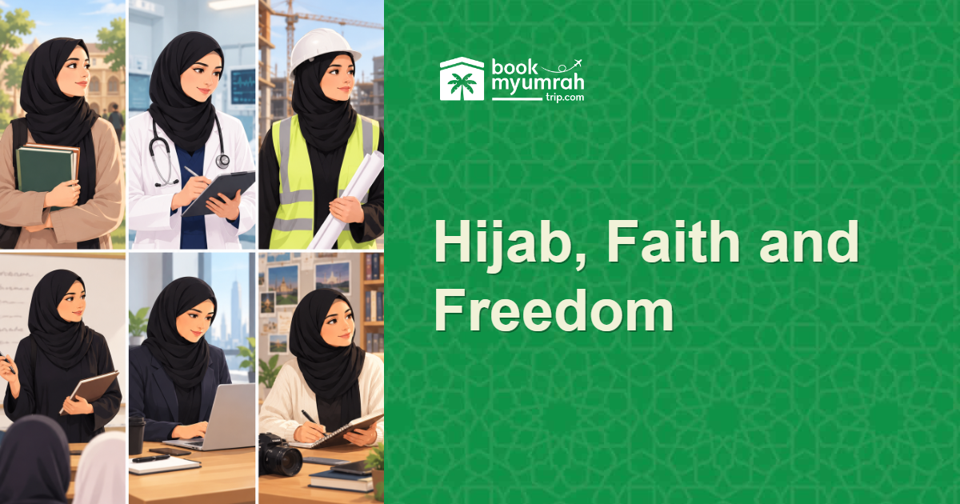
Hijab, Faith and Freedom: A Muslim Woman’s Perspective
A hijabi perspective on what freedom really means exploring personal choice, faith, criticism from all sides, and the global debate around hijab. " with BookMyUmrahTrip.