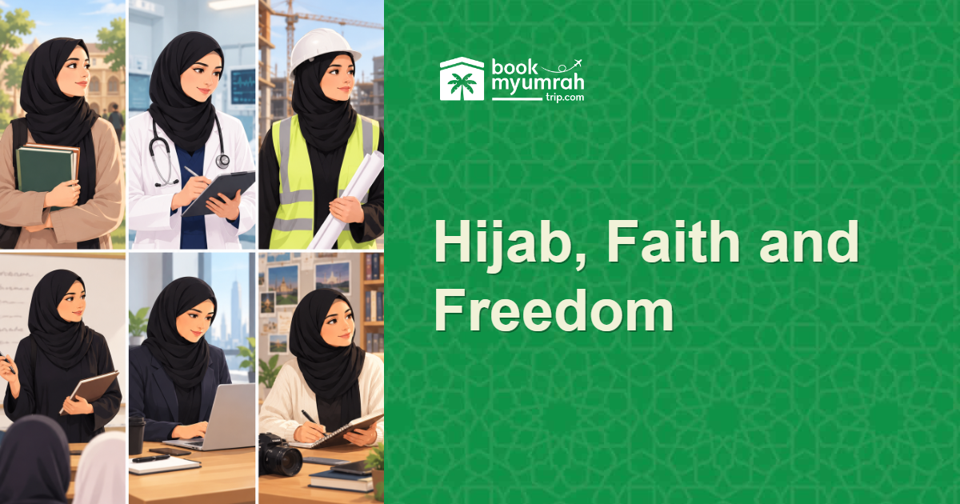
For one woman, hijab might be the result of years of reflection and spiritual growth. For another, it's been part of her identity since childhood. For someone else, it's not deeply political at all it's just part of getting dressed in the morning.
And that is exactly where freedom and hijab meet not in one universal story, but in every woman's right to write her own.
And then, there are Muslim women who don’t wear hijab at all, and that too is part of the reality.
So how do we define freedom here?
Perhaps by understanding that freedom doesn’t look the same for everyone. Faith, dress, and personal choice are different for every woman and for many, hijab isn’t the absence of freedom, it is freedom.
In this blog, we'll explore the hijab from the inside out not as a political symbol or a headline debate, but as a lived reality for millions of Muslim women around the world.
We'll ask the questions that rarely get asked, and hear the voices that rarely get heard.
What Is Hijab?
Hijab is an Arabic word meaning "barrier" or "covering" it refers to modest dress and behaviour.
For Muslim women, it usually means covering the hair, neck, and body in loose clothing.
But it's not just clothing it includes the way you speak, carry yourself, and interact with others.
Men also have modesty requirements in Islam (covering the navel to the knee, lowering the gaze).
Why Muslim women wear hijab varies from person to person faith, identity, culture, or personal comfort.
Freedom and hijab aren't opposites. For many of us, the hijab is freedom.
Travel through the Muslim world and you’ll quickly notice hijab has no single look.
In India, it could be a softly draped dupatta.
In the Gulf, a long abaya.
In East Africa, a vibrant khimar. The styles shift with culture, but the heart behind it stays the same.
Hijab may look different across cultures, but the principle remains the same Muslim women's rights include the freedom to define modesty, faith, and identity on their own terms.
What "Hijab Freedom" Means
It means a woman can choose to wear it or not without state interference, family pressure, or social shaming.
It means no government forcing it on, and no government banning it off.
It means respect for the woman who wears it and the woman who doesn't.
Islam and women's freedom are not in conflict when choice is at the centre.
True freedom is the ability to make your own decisions and live with dignity.
True women's rights and hijab freedom both rest on one principle i.e., a woman's choice must be hers alone, free from force and fear.
Hijab as a Personal, Chosen Expression of Faith
For me, wearing hijab was a decision I made as an adult not something imposed.
It's a daily reminder of my faith, like a prayer mat or a Quran on my shelf.
Muslim women's rights include the right to dress according to their beliefs.
Some women wear it for God, some for identity, some for both.
Hijab identity and empowerment go hand in hand when the choice is yours because true freedom is the right to define yourself, on your own terms.
Historical and Contemporary Hijabi
Hijab is not new. Its legacy is long and powerful.
Early Muslim women scholars such as Aisha (RA) and Umm Salama (RA) were hijab wearing leaders, teachers, and narrators of hadith.
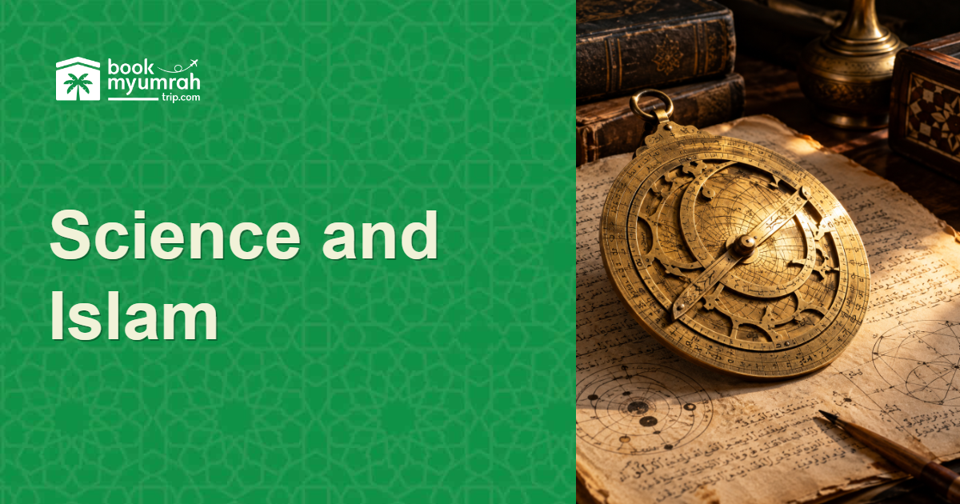
During the Golden Age of Islam, hijabi women worked as physicians, astronomers, and patrons of universities like Fatima al Fihri, who founded al Qarawiyyin University.
Hijabi women today work as:
Athletes
Business leaders
Politicians
Doctors
Pilots
Researchers
They also work in many other professions.
The contemporary hijabi navigates modern life while holding on to tradition, proving that faith and ambition coexist.
This continuity shows us that Islam and women’s freedom have a historical basis that is often ignored in modern debates.
The Double Standard Hijabi Women Often Face
A hijabi woman sometimes has to answer questions that other women may never be asked.
"Did your parents make you wear it?"
"Are you allowed to take it off?"
"Does your husband decide what you wear?"
"Isn't it difficult to work in a hijab?"
The person asking may be genuinely curious. Still, being repeatedly questioned about something so personal can become tiring.
There is another side to this as well. Freedom and Hijab can exist together. A Muslim woman who does not wear hijab may be questioned by people within her own community about that decision. This is where women’s rights and hijab become a much broader subject.
The issue is not simply whether someone covers her hair. It is whether she is treated as a person capable of making decisions about her own life.
The real question was never about cloth, but about choice and until Muslim women and freedom are respected as inseparable, no woman will be truly free to live with dignity on her own terms.
The View From Outside: Critiques and Counterarguments
Some argue hijab is inherently oppressive but that ignores the millions who choose it.
Others say it's a political symbol but for most of us, it's personal.
Critiques often come from people who've never spoken to a hijabi woman. Muslim women and freedom are not a contradiction they're a conversation.
Listening is better than assuming.
Hijab, Law, and the Politics of Choice
When governments turn the hijab into a matter of law, the question of freedom and hijab becomes not about cloth, but about who controls a woman's choice.
In Turkey, hijab was banned in universities and public offices for decades.
In Saudi Arabia, it was once mandatory now it's not.
In Iran, it's legally enforced and women are protesting.
In France, it's banned in schools and some public spaces.
The common thread? Women's bodies become political battlegrounds.
The real issue isn't hijab. It's who gets to decide.
Voices From Around the World
Strip away the laws and the politics, and what remains are women speaking for themselves each defining freedom and hijab on her own terms.
A British hijabi:"I wear the hijab for God, not to please men or governments."
An Iranian woman: "I want the freedom to choose, not a forced hijab."
A Saudi woman: "I wear it because I want to, not because I have to."
An American convert: "Hijab gave me freedom from being judged on my looks."
Freedom and hijab mean something different in every culture and that's okay.
It's a form of worship, such as the fast of Ramzan and prayer.
Why Muslim women wear hijab for many, the answer is simple: because God asked us to.
But worship must be sincere. Forced worship is no worship at all and that is why Islam and women's freedom are not in conflict, but in harmony when faith is chosen, not coerced.
Choice and Community Pressure
Choice is rarely made in a vacuum.
A young woman may hear one opinion from her parents, another from friends, and something completely different on social media.
She may be told:
"You should start wearing a hijab."
"You are too young."
"You should take it off for work."
"You will regret wearing it."
"You will regret not wearing it."
Imagine hearing all of that while trying to figure out what you believe yourself.
This is why Muslim women and freedom deserve thoughtful discussion.
The people around us can influence our faith. But personal conviction develops with time.
So, give someone space to learn and reflect. It can be more valuable than telling a woman what her decision should be.
Hijab and Public Identity
Hijab makes you visible you're immediately identified as Muslim
That can be empowering or exhausting, depending on where you live.
Hijab identity and empowerment mean owning that visibility on your terms.
Some days I love it. Some days I'm tired of the questions. Both are valid.
Hijabi doctors, teachers, engineers, and entrepreneurs exist everywhere
Some workplaces make it hard but many are changing
Islam and women's freedom include economic independence.
From Khadijah's (RA) legacy to today's hijabi professionals, freedom and hijab prove that a woman can cover her hair and still lead and thrive on her own terms.
A Hijabi Perspective on Umrah
Umrah is a journey of the soul and hijab is part of that journey
At the Haram, you're surrounded by women from every culture, all covered
There's no judgment, no politics just worship
Freedom and hijab feel different when you're walking toward the Kaaba
It's the one place where you're not "the hijabi" you're just a pilgrim.
Pilgrims Preparing for Umrah or Hajj Hijabi with BookMyUmrahTrip
BookMyUmrahTrip understands the needs of female pilgrims.
You'll get guidance on hijab-friendly hotels, transport, and group arrangements.
You'll receive support with mahram requirements, packing, and rituals.
You'll find blogs covering practical tips for hijabis preparing for Umrah or Hajj.
For the female pilgrim, the journey to Umrah or Hajj is a deeply personal act of faith and services like BookMyUmrahTrip that respect her needs and choices show how Islam and women's freedom can walk hand in hand every step of the way.
Takeaway
A woman who wears a hijab can be deeply faithful, career-driven, full of dreams, devoted to her family and completely herself all at once.
One piece of cloth can tell you about one choice she made. It can never tell you who she truly is.
Freedom and hijab are not opposites for many women, the hijab is not a cage but a choice, and true freedom is simply the right to make that choice for yourself.
FAQs
What does the hijab mean to a Muslim woman?
For a lot of Muslim women, hijab means more than what they wear. It is an act of devotion and God consciousness, known as taqwa. It's a personal connection with faith and a choice to be recognized for character over appearance.
Is wearing the hijab a personal choice in Islam?
In Islamic theology, hijab is considered an obligation for adult Muslim women. In practice, whether and how a woman wears it is her personal decision between her and God. Faith teaches there is no compulsion in religion devotion has to come from the heart.
Do all Muslim women agree that hijab represents freedom?
Not all describe it the same way, and that's the point. For many, hijab _is_ freedom freedom from beauty standards, from objectification, from social pressure. For others, it's simply obedience, identity, or spirituality. There is no single "Muslim woman" experience.
Are science and Islam opposites?
No. Islam has a long history of encouraging knowledge from astronomy and medicine to mathematics. The Quran encourages thinking and learning. For many Muslims, science is a way to better understand what God has created.
Is hijab mandatory in Islam?
According to the majority of classical Islamic scholars and the four main schools of thought, covering the hair and body modestly is obligatory. The face and hands are generally considered exempt. Scholars derive this from verses in the Quran [24:31 and 33:59] and from hadith.
Does Islam allow hijabi women to pursue education, careers, and leadership?
Absolutely. Islam not only allows but encourages education for women. History is full of examples. They were scholars, businesswomen, physicians, and leaders. And today, hijabi women are in every field.
Who are some famous Muslim women in history who wore the hijab?
Aisha (RA) and Umm Salama (RA): Leading scholars and narrators of hadith.
Khadijah (RA): A successful businesswoman and the first person to accept Islam.
Fatima al-Fihri: Founded al-Qarawiyyin University in Fez, the oldest continuously operating university in the world.
How are modern hijabis breaking barriers today?
Today, hijabi women are breaking barriers in every field.
You see them
On Olympic podium
In cockpits as pilots
In operating rooms as surgeons
In parliaments
Leading startups
Winning Nobel Prizes like Malala Yousafzai and Tawakkol Karman.
Hijab hasn't stopped them, for many, it empowers them.
How does travelling for Umrah or Hajj impact a hijabi woman’s spiritual journey?
For many hijabi women, it's deeply transformative.
When you stand before the Kaaba with millions of women from different cultures, all dressed in simple white, you truly feel that equality and devotion are at the heart of Islam. It's often described as a reset for faith.
Does Islam require modesty only from women?
No. Modesty in Islam is for both men and women. The Quran first instructs men to lower their gaze and be modest, and then women. For men, it also includes modest dress and behavior.
What challenges do hijabis face?
Hijabi women face discrimination not only in employment and education but also in public services, and safety. They get judged by their appearance rather than their qualifications or sometimes by character. They also navigate social stereotyping and pressure. Still many resist and challenge these barriers through advocacy and activism.
How does BookMyUmrahTrip cater specifically to female pilgrims?
For female pilgrims, comfort and safety matter most. BookMyUmrahTrip typically provides:
Female group coordinators and dedicated support
Mahram-compliant packages and women-only group options
Hotels close to Haram to minimize walking
Guidance for rituals specific to women from female religious guides
Safe, private transport and 24/7 on-ground assistance.
Makkah to Madinah: Exploring the Diversity of Islamic Sites in Saudi Arabia
The most important Islamic historical sites from Makkah to Madinah, their spiritual significance, and how to plan meaningful visits while performing Umrah with BookMyUmrahTrip.
Umme Ayesha
Read
Hijab, Faith and Freedom: A Muslim Woman’s Perspective | BookMyUmrahTrip