Purpose Over Pressure: What Islam Teaches About Success in a Hustle Culture | BookMyUmrahTrip
Hero background

Blog.

Purpose Over Pressure: What Islam Teaches About Success in a Hustle Culture
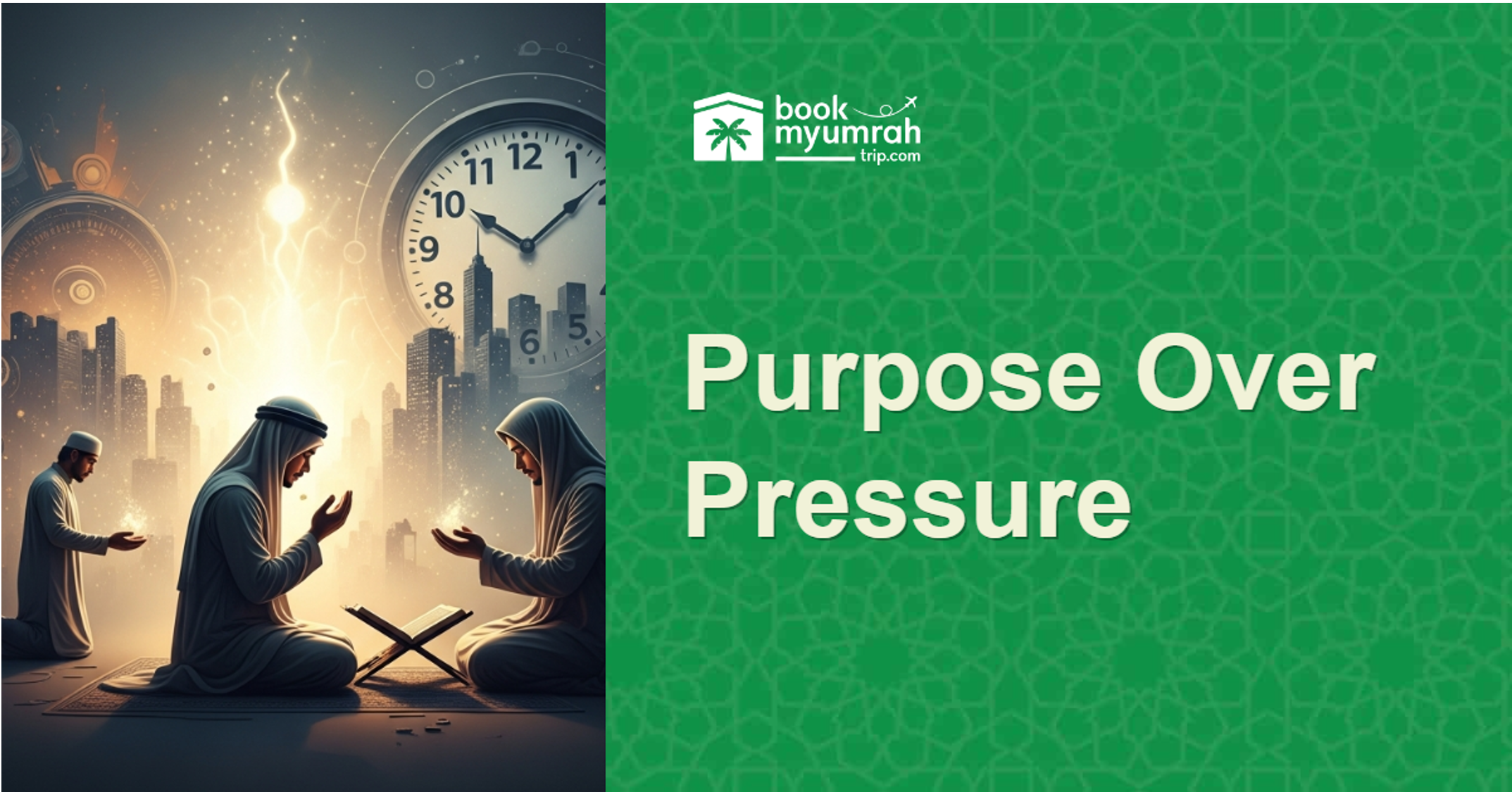
Cover Image for Purpose Over Pressure: What Islam Teaches About Success in a Hustle Culture

Ever found yourself scrolling through emails before Fajr or feeling bothered about relaxing on weekends? It's not just you. Somewhere between purpose and anxiety, the current generation has been confusing burnout with success.

In the modern society where the phrase "rise and grind" has been adopted as a lifestyle, success is like a never-ending race. Hustle culture is the culture of being perpetually on the go, of valuing productivity as the value marker, and of nights of sleeplessness as wooden ornaments. However, restlessness, nervousness, and spiritual loneliness exist behind that facade. However, the timeless remedy to this is Islam, whose culture of success is defined by purpose, balance, and Godly blessing instead of constant struggle.

The Issue with Hustle (Grind) Culture

This is the culture of hustle that lives off the philosophy that the more you do, the more you get.

Recent research showed that a whopping 63% of employees are experiencing burnout frequently during the week a very strong signal that the continuous hustle culture is severely affecting people's health.

Social media bombards us with hashtags about grinding harder and never stopping and prioritizing rest as a form of guilt and work as a form of identity. This culture has reduced success to be the goal of many people at the expense of their peace, relationships, and even religion.

It causes burnout and spiritual disconnection psychologically. Success can be measured in numbers (income, promotions, or followers), which does not provide any room for inner development or appreciation. Instead, Islam helps us keep in mind that it is not what we do that makes us know our worth, but rather the way we are before the eyes of Allah.

The Alternative of Islam: The Barakah Culture

The Islamic worldview has something radically different: Barakah Culture. Barakah is a heavenly blessing that increases the good in whatever we possess, be it in terms of time, money, or energy. Not having more but having enough is blessed.

Allah puts Barakah in the work of a Muslim when he or she works earnestly. Your work might do less in the eyes of the world, but blessed of God, your work will provide peace, fulfillment, and long-lasting effects. Our beloved messenger, Muhammad ﷺ is an instance of a man having a balanced life. He was not just a worker like you and me, but also a leader and keen worshipper of Allah (s.w.t), and still made time to be with his family and think in solitude. Once he said, “Your body has a right over you, your eyes have a right over you, and your wife has a right over you.” ~Bukhari 5199

It is that balance that is the spirit of this culture: not pressure, but peace.

Work Ethics in Islam: Intended Work

Islam does not disapprove of hard work; it polishes it. Work ethics in Islam focus on sincerity (ikhlas), integrity, and intention (niyyah). When one works daily, his or her work may turn into a form of worship when he works with the right heart. Prophet Muhammad ﷺ stated that the best people are the most beneficial to others.

Since early Muslim traders were reputed to be honest, and scholars went to their books at night in order to learn, Islam explains that only when it is purposeful is effort valued. Islamic work ethics help us remember that what matters in Islam is not whether we make money, serve, and conduct business, but the way in which we do it.

Success Beyond Materialism

The success (Al-Falah) in the Quran is not just about having money or a title but about being holy and spiritual. “Successful are indeed those who believe and humble themselves by praying.” ~Quran 23:1-2

This illustrates that the very best of successes does not take the shape of riches or celebrity, but rather the shape of inner calm and closeness to God. Islam is for aspiration; however, it does not accept at all the vices of pride and avarice. The two main virtues of success that last are patience (sabr) and thankfulness (shukr). The rivalry to win and win goes away when one comes to know that it is only Allah who gives.

Discovering a Mission in Labor and Rest

Islam develops balance in everyday life. The five daily prayers that an individual performs every day break up the 24 hours into periods of rest and contemplation, bringing believers back into reality amidst the hustle and bustle. Muhammad ﷺ even advised rest and moderation by telling them: “Do good deeds appropriately, with sincerity, and in moderation, and you will achieve your goal.” ~Bukhari 6464

This rhythmic effort, followed by faith in Allah (tawakkul), makes Muslims view rest as a renewal and not laziness. Purposeful work is not only doing but also being there and making sure that every job leads to some higher purpose.

Actionable Steps to Change from Hustle to Barakah Culture

  • Clarity of intent: Have intentions when starting every job with Bismillah and a pure intent.

  • Strike a balance between ambition and gratitude: Apply the celebration of small victories and have faith in the timing of Allah.

  • Guard your prayer times: They are your built-in meditation periods.

  • Also, put integrity before speed: Quality and honesty are appealing to Barakah.

  • Cut the ties of comparison: The process of every human being is run by divine wisdom.

It does not mean that by living in such a culture one is not going to work, but one is aware of working smartly, ethically, and spiritually.

Take Away

Islam has a message for a world where progress is equated with pressure it is asking believers not to rush for nothing but to have a reason. Hustle culture pushes us to the limit, and Barakah culture brings us to satisfaction. With faith, purpose, and proportions, we find a success that not only feeds the body but also the soul as a whole.

The Islamic image of success has nothing to do with the speed of our ascending but with how in line we remain with Allah, with our goal, and with inner tranquility.